What Is Eco Friendly Printing and Why Does It Matter?

dip saha
October 13, 2026
22
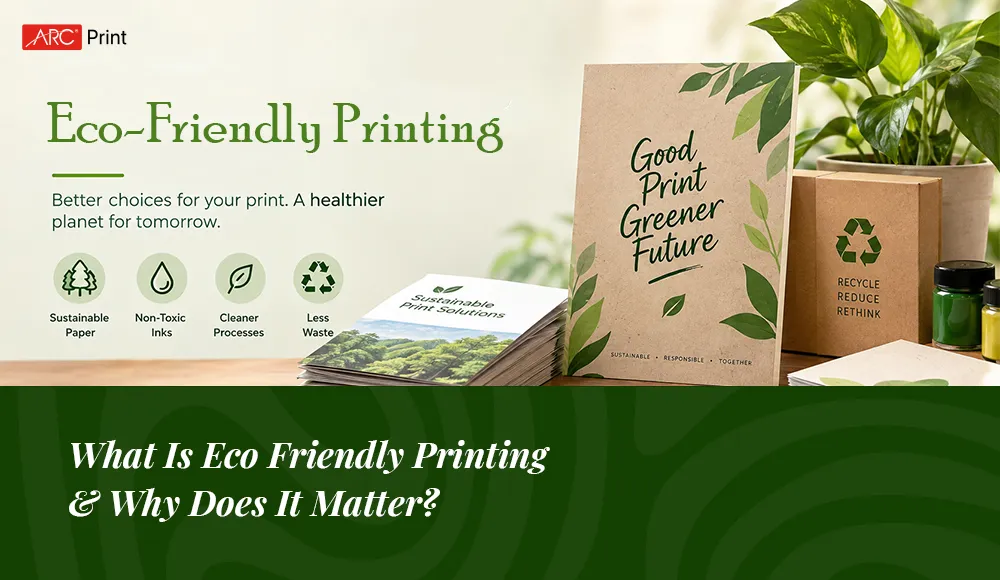
Think about the last custom booklet someone handed you. Did you wonder what went into it? Probably not, and that’s the problem. Paper mills burn through water and energy, inks and wash-up solvents give off fumes, and a surprising amount of what gets printed is in the bin a week later. Eco Friendly printing is about shrinking all of that. It covers which paper gets used, which ink goes on it, how the press is run, and where the leftovers end up. The idea is simple. Doing it properly takes some attention, so let’s go through it.
What Is Eco Friendly Printing?
A Basic Definition
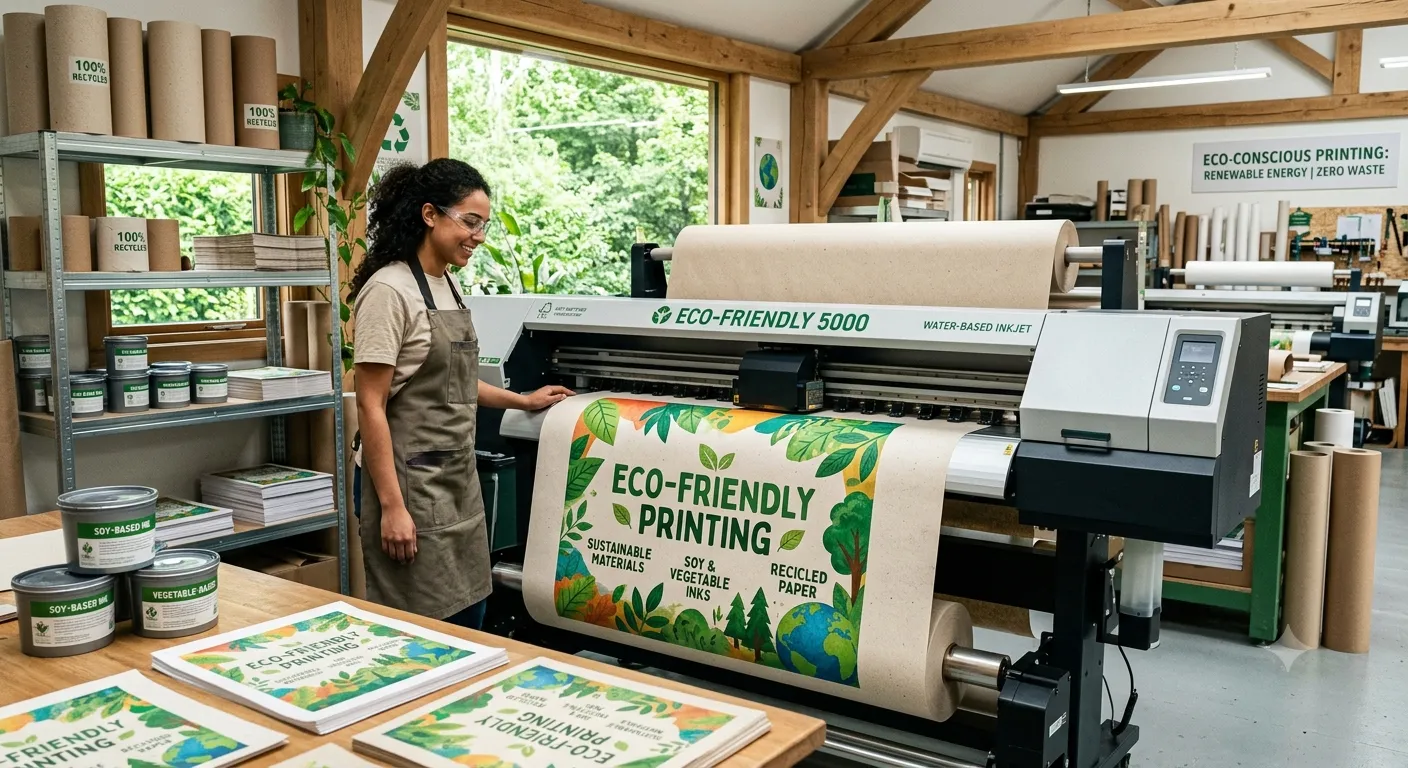
Eco Friendly printing (green or sustainable printing, if you hear those terms) means making printed material with less environmental harm at each stage. That runs from where the paper fibre came from to how the finished boxes are shipped. There’s no single rulebook behind it. A printer can buy beautifully certified paper and still clean the presses with harsh solvents, so judging one feature on its own can mislead you.
Conventional vs. Eco Friendly Printing
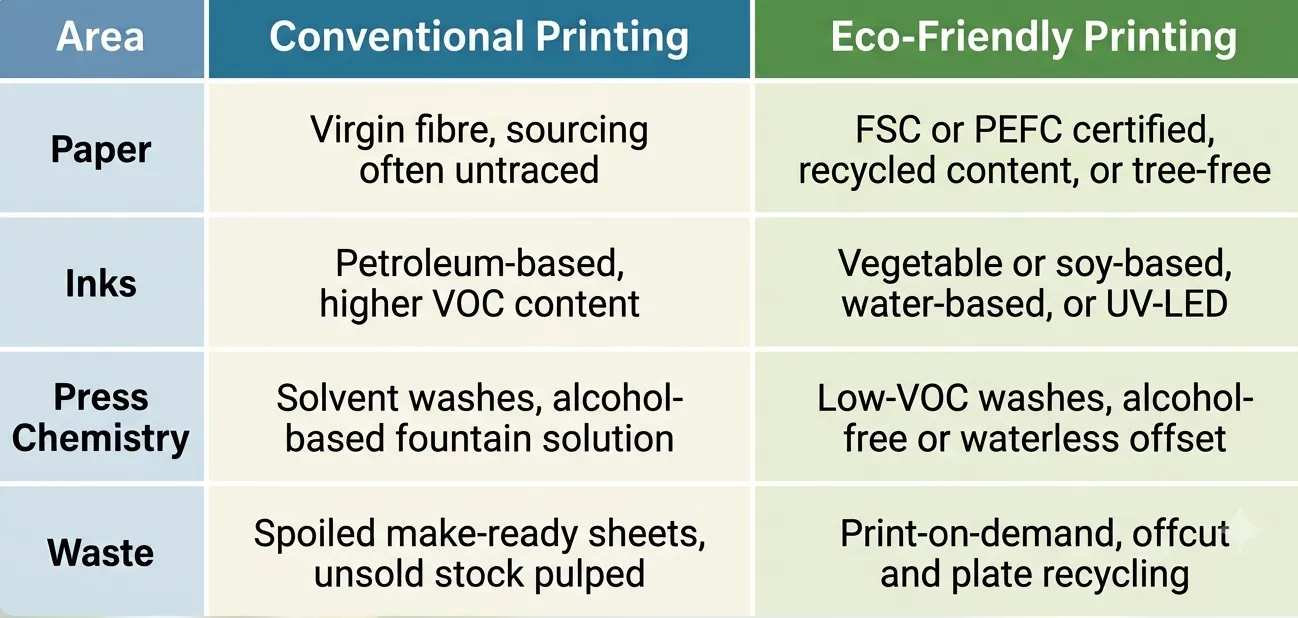
Conventional printing isn’t automatically careless, and plenty of ordinary print shops recycle plates and manage waste properly. The difference is how deliberate and documented those choices are.
How It Differs From Regular Printing
Regular printing isn’t automatically careless. Lots of ordinary print shops recycle their plates and handle waste responsibly. What changes is how deliberate the choices are and whether anyone can show you proof. A standard job tends to default to virgin paper, petroleum-based ink, and solvent washes. A greener one uses certified or recycled paper, vegetable-based or lower-energy inks, and cleaner press chemistry, and then tries hard not to waste anything along the way.
Where the Real Difference Gets Made
Paper Matters Most
Paper is usually the biggest material in any print job, so that’s where most of the impact sits. Certification from the Forest Stewardship Council (FSC) or PEFC means the fibre comes from forests managed to a recognised standard. Recycled paper, especially with post-consumer content, keeps fibre that already exists in use. There are tree-free sheets too, made from bamboo or crop residue. A detail people often miss: recycled fibre gets shorter each time it’s reprocessed, so recycled isn’t always the better pick. Certified virgin paper is still a sensible choice.
Ink Is Trickier Than It Looks
Most offset inks start with petroleum-derived oils. Vegetable and soy-based inks swap some of that for renewable oils, and they usually give off fewer volatile organic compounds (VOCs). Read the label with a little suspicion, though. “Soy-based” almost never means all soy, so ask what share is actually renewable. Water-based inks work well for flexographic and some digital jobs. UV-LED curing needs less energy than the older mercury-vapour UV lamps, which is a real gain.
What Happens in the Press Room
Computer-to-plate imaging did away with the film and developed chemicals that older platemaking needed, and processless plates trimmed the chemistry even further. On offset presses, alcohol-free or low-alcohol fountain solution cuts VOC emissions. Waterless offset removes the fountain solution entirely, but it needs tight temperature control to run well. Digital presses skip plates altogether and produce very little set-up waste, which is why they suit short runs so well.
The Waste Nobody Sees
Offcuts get the attention, but they’re only part of it. Sheets get spoiled while the press is being set up. Leftover stock sits in a warehouse until somebody pulps it. Boxes arrive twice the size they needed to be. Planning quantities carefully, printing on demand, recycling offcuts and plates, and choosing right-sized recyclable packaging all make a dent.
Why Does Eco Friendly Printing Matter?
Forests, Water, and Energy
Printing draws on all three and creates chemical waste as well. Responsible sourcing, lower-VOC inks, and less spoiled stock ease the demand on each. A single job won’t change much. Print runs pile up over a year, though, and the totals get large.
The People Running the Machines
Lower-VOC inks and cleaning agents mean less solvent exposure for press operators and finishing staff. You’d never notice that from the finished piece, which is exactly why it gets overlooked. For items people handle up close, ink and coating choices count too. Food-contact packaging comes with its own regulations, and a green claim never stands in for meeting them.
Buyers Have Started Asking
More customers want to know where their printed material comes from, and some corporate buyers now put sustainability criteria into supplier selection. Certified paper or documented waste practices give a business something concrete to point to. A vague promise doesn’t carry nearly as much weight.
Does It Cost More?
Sometimes, a little. Certified and specialty papers can carry a premium. Ordering closer to what you’ll actually use and spoiling less stock can win some of that back. The honest way to find out is to ask for a quote on both versions of the same job and compare the two.
Will It Look Worse?
Not by default. Today’s vegetable-based inks and recycled stocks can give sharp, rich results. Some recycled sheets come out a bit less bright or more textured, and colour can look different on uncoated paper. Ask for a proof or sample before a big run. It takes a few days, and it can save you a lot of regret.
How to Tell Who’s Actually Doing It
Questions Worth Asking
Start with the paper. Is it FSC or PEFC certified, and can the printer show you the chain-of-custody details? How much of it is recycled, and is that post-consumer? Then move to the press room. Which inks and fountain solutions do they use, and what happens to offcuts, used plates, and waste chemicals? A printer who can’t answer the first two quickly is telling you something.
Spotting Greenwashing
Words like “green,” “natural,” or “eco” with nothing specific behind them should prompt a follow-up question. Certifications such as FSC, PEFC, and ISO 14001 (which covers environmental management systems) can be verified, and a printer who holds them is usually glad to show you.
What You Can Do as a Buyer
You don’t need a sustainability department to make a difference here. Order what you’ll actually use, and go digital for short runs. Leave dates and one-off details off anything you’ll be storing, since they turn leftovers into scrap. Standard sizes cut trim waste, and lighter stocks use less fibre. Plastic lamination and foil make paper harder to recycle, so an aqueous coating is often a better fit when the job allows. And if it suits the piece, a short line asking people to recycle it costs nothing.
Small Changes Buyers Can Make
Order What You’ll Use
Match quantities to actual need, and use digital printing for short runs. Avoid printing dates or details that make leftover stock useless.
Design Choices That Help
Standard sizes reduce trim waste, and lighter stocks use less fibre. Plastic lamination and foil make paper harder to recycle, so an aqueous coating is often a better fit if the job allows it.
Think About Disposal
Choose recyclable packaging and, where it fits, add a short line asking recipients to recycle the piece.
Wrapping Up
Eco Friendly printing is a string of better choices across a job, not a badge on the finished piece. Ask specific questions about paper, ink, and waste, and you’ll soon see who’s doing the work and who’s only borrowing the word.
FAQ
Is Eco Friendly printing the same as green printing?
Essentially, yes. Eco Friendly, green, and sustainable printing all describe reducing environmental impact across paper, ink, process, and waste.
Are soy inks better for the environment?
They generally use renewable oils and release fewer VOCs than petroleum-based inks. The renewable share varies, so ask for specifics.
Is recycled paper always the greener choice?
Not always. The impact depends on recycled content, how the paper was made, and transport. FSC-certified virgin paper is also a responsible option.
Is digital printing more Eco Friendly than offset?
It depends on the run. Digital avoids plates and set-up waste, which helps on short runs, while offset can be more efficient at high volumes.
Does Eco Friendly printing cost more?
Sometimes slightly, depending on materials. Less waste and right-sized quantities can narrow the difference.
Which certifications should I look for?
FSC and PEFC for paper sourcing, and ISO 14001 for environmental management systems.