Small Business Branding on a Budget : Practical Ways to Build Your Brand Without Overspending

Sareen Bhattacharjee
November 6, 2026
6
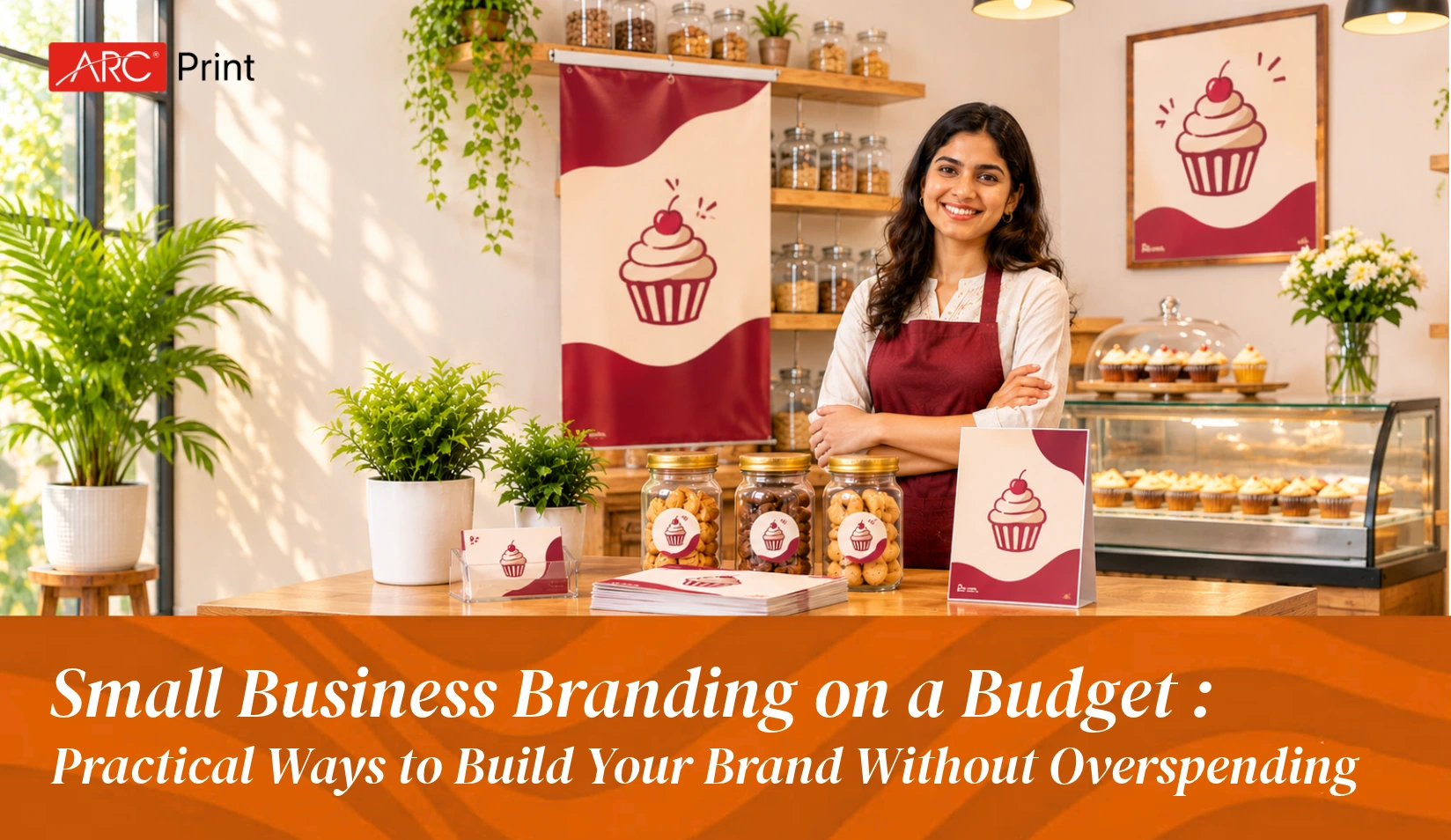
Picture a home baker in Kolkata whose chocolate cakes sell out every weekend. Or a new tuition centre with excellent teachers and a half-empty batch. The product is good. The trouble is that hardly anyone beyond their own circle knows they exist, and the kind of advertising that could change that is nowhere near their budget.
This is where many small business owners get stuck. They assume branding means agencies, elaborate designs and big ad spends. It doesn’t. Small business branding on a budget comes down to a few thoughtful choices, repeated wherever customers see you. Put simply, you don’t need a big branding budget to look professional. You need the right printed materials at the right time.
Why Branding Matters Even for Small Businesses
Branding is what people remember about your business after they’ve dealt with it. It’s the name they recall, the colours they link to you and the impression that you’re organised and dependable.
For a small business, that counts for a lot. When two shops sell similar things, the one that looks consistent and professional usually feels like the safer choice. A neat visiting card, a clear signboard and a tidy label all say, quietly, that you take your work seriously.
Branding also helps people find you again. A customer who loved your service three months ago may have forgotten your phone number, but they might remember the green and yellow label on the jar. That kind of recall is built through repetition, not big spending.
Small Business Branding on a Budget : Building a Strong Identity Without Overspending
Before you order anything, get a few basics right. They cost little, and they save money later. These small business branding ideas work for branding for startups and established shops alike.
Pick two colours and one or two fonts. Use them everywhere. A limited palette looks deliberate, and it makes every printed piece feel like part of one family.
Keep your logo simple. It doesn’t have to be clever. It has to stay readable at small sizes, from a visiting card to a shop-front sticker, and still look fine in a single colour.
Say one thing clearly. Decide what people should learn from you: what you sell, where you are, how to reach you. Materials crowded with five messages tend to get ignored.
Stay consistent. The same logo, colours, phone number and tone across every piece is what turns scattered printouts into custom printed marketing materials that actually build recognition.
Don’t order everything at once. Start with what customers see first, and add the rest as the business grows.
8 Affordable Printing Solutions That Can Help Small Businesses Build Their Brand
Low-cost marketing materials only work if each one has a job. Here is what each of these eight does, who it suits and how it might look in practice.
Visiting Cards for Professional Networking
Almost every business can use one, from freelance photographers to wholesale traders. Good visiting card printing gives you a quick way to leave your details at a meeting, a stall or a shop counter. People tuck cards into wallets and find them weeks later.
Say a freelance interior designer hands a clean card to every client on a site visit, with a logo, phone number and Instagram handle. It’s an easy way for them to call back. Keep the layout uncluttered. You can start with custom visiting cards.
Banners for Local Visibility
Banners suit shops, clinics, salons and stallholders. A banner outside announces who you are to people walking past, and it can also carry an opening message or an offer. This is storefront branding at its most direct.
Imagine a new bakery hanging a banner across its entrance for the first fortnight, showing the name, a line about what it sells and a contact number. Choose a message that will still make sense for a while, so the banner stays useful. Look at banners for this kind of use.
Posters for Promotions and Product Awareness
Retailers, cafés, coaching centres and gyms can use posters for new arrivals, seasonal offers or announcements, inside the premises or on a community notice board. They work well for short-term messages that change often.
A stationery shop might put up a custom poster of school supplies near the billing counter, where customers wait and look around. Custom banners and posters work best as a pair : the banner draws people in, and the poster tells them what’s inside.
Flyers for Reaching Nearby Customers
Flyers suit local business promotion, such as a new tailor, a tuition batch or a home-cooked tiffin service. You can hand them out near a market, slip them into parcels or leave them at a nearby housing society’s notice area, with permission.
Because you choose who receives them, a small run aimed at the right neighbourhood can be more sensible than broad advertising. A new salon might distribute custom flyers within a few streets of its location in the opening week.
Booklets for Presenting Products and Services
When you have more to say than a flyer can hold, a booklet helps. A small manufacturer can use one as a product catalogue, a training institute as a course guide, and a service provider as a simple company profile.
It keeps information organised, and customers can take it away and read it later. A furniture workshop, for instance, could show its range and contact details in one neat booklet to hand to architects and homeowners. Promotional flyers and booklets also pair well, with the flyer sparking interest and the booklet answering questions.
Standees for Exhibitions and Retail Promotions
If you attend exhibitions, trade fairs or local expos, a standee gives your stall height and visibility among dozens of others. It also works near a store entrance or at a launch event.
Use it for your name, logo and one key message. A handicraft seller at a weekend fair might use a standee with the brand name and a short description, so passers-by understand the stall at a glance.
Sticker Labels for Better Product Packaging
These are for anyone selling physical goods : pickles, soaps, candles, spices or bottled products. Product packaging labels let you brand jars, bottles, boxes and bags without redesigning your packaging.
A home-based pickle seller could put simple sticker labels with a logo, product name and contact details on plain jars, and get a consistent, shelf-ready look. Check any labelling rules that apply to your product category before you finalise the text.
Glass Stickers for Storefront and Office Branding
Shops, clinics, studios and offices already have glass, and glass stickers turn it into a branding surface. They can carry a name, logo, operating hours or a short message on a door, window or office partition.
A clinic might put its name and timings on the entrance glass, so patients know when it’s open before they walk in. Keep the text short, and check how it reads from outside in daylight. Here are custom glass stickers for this purpose.
How to Prioritise Your Branding Expenses When You Have a Limited Budget
You don’t need all eight. Most businesses need two or three right now. These are the business promotional materials worth buying first.
Begin with the essentials. Visiting cards plus one visible sign, such as a banner or glass stickers if you have a premises, or labels if you sell products. These are the core branding materials for startups.
Let customer contact decide. If customers visit you, focus on the storefront. If you sell at events, a standee earns its place. If you sell through WhatsApp or online, labels and cards that travel with each order matter more.
Think about quantity. Order what you’ll realistically use in the next few months. A smaller run is less risky while you’re still refining your logo or contact details.
Reuse where it makes sense. A banner carrying only your business name can stay up for a long time. Keep time-bound offers for posters and flyers, which are easier to replace.
Skip anything without a purpose. Before ordering, ask who will see it and what you want them to do next. If you can’t answer, wait.
How ARC Print Can Help Small Businesses with Their Branding Needs
Branding often means visiting several suppliers, each with different formats and processes. ARC Print brings many of these materials together in one place, including visiting cards, banners, posters, flyers, booklets, standees, sticker labels and glass stickers.
You can upload your own design and customise products to suit your business, which helps your colours and logo stay consistent from one item to the next. For affordable business printing, it’s an option worth looking at if you want printing solutions for small businesses without juggling many vendors.
For current product options, customisation details, pricing and bulk-order information, visit the ARC Print website. If you’re planning a larger run, there’s also a bulk printing page.
Start Small, Stay Consistent, and Grow Your Brand
Branding isn’t a one-time project. It builds one piece at a time. Begin with a visiting card and one visible sign. Add a flyer for a launch, labels once your product line settles, and a standee when your first exhibition comes up.
As long as the logo, colours and message stay the same, each piece adds to the last. Even a few well-planned printed materials can give a new business a professional presence. Don’t wait for the perfect budget. Start with what your customers will see first.
Conclusion
Building a recognisable brand doesn’t always need a huge marketing budget. It needs clarity about who you are, consistency in how you show it and the right printed materials at the right moment.
If you’re ready to begin, explore the printing solutions at ARC Print and pick the materials that fit your business today. The rest can follow as you grow.