What Is GSM in Cloth? Check This Complete Guide

dip saha
October 19, 2026
19
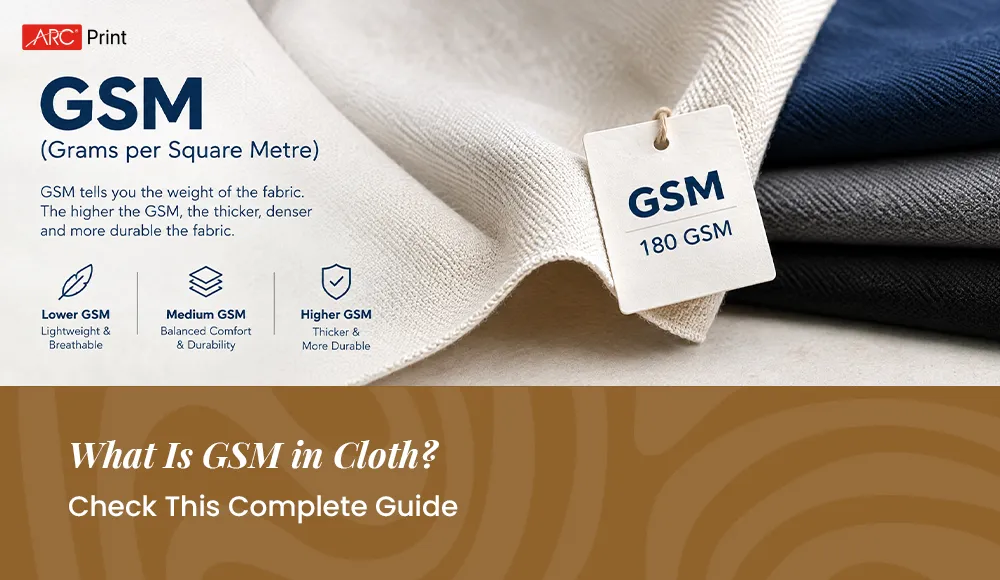
You might have seen fabric GSM on a T-shirt label, a bedsheet listing, or a fabric supplier’s catalog showing “180 GSM”, “280GSM”, and “400 GSM,” respectively. There are many people who don’t know what it actually means. This number tells us whether the cloth will feel light, thick, or cozy, along with its durability. So, once you know what GSM is in cloth? you will never shop for clothes or garments the same way again.
So, now let’s start with an introduction –
What is GSM in Cloth?
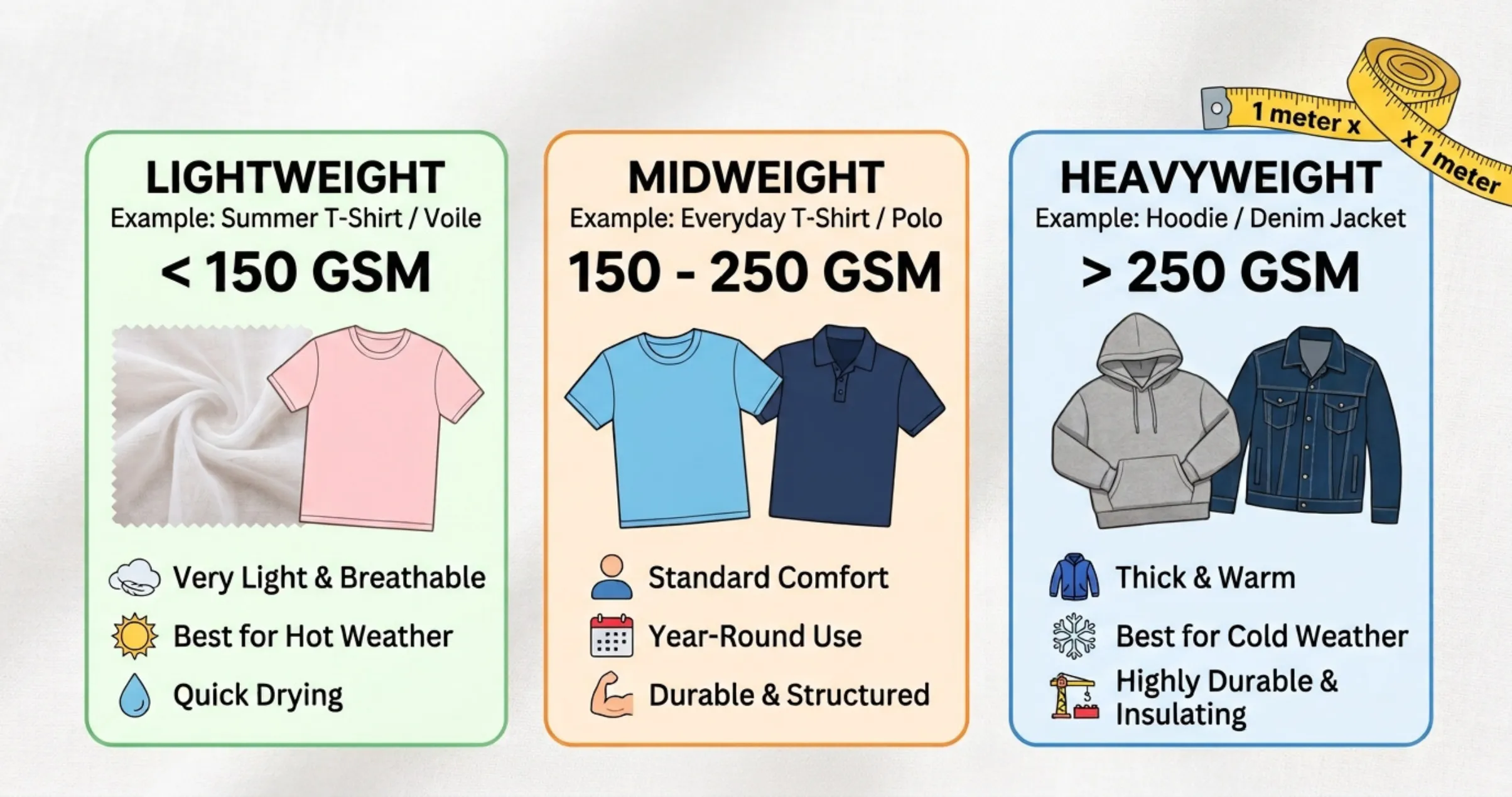
GSM stands for grams per square meter. It basically measures the weight of the fabric by calculating how much a one-square-meter piece of cloth weighs in grams. Imagine cutting a piece of cloth into a square measuring exactly one meter by one meter and placing it on a kitchen scale. If it shows 200 grams, it means the fabric is 200 GSM, and if it shows 400 grams, it means 400 GSM. This is what GSM in fabric means. It is a standard way to describe how dense, heavy, or substantial a fabric is, regardless of its length and width.
Which Factors Determine GSM in Fabric?
There are mainly three factors that determine the factors in GSM in cloth. Let’s have a look at them below –
Fabric Density
This indicates how many threads run per inch. In fabric, it shows how tightly the loops are stitched. Tighter stitches mean higher GSM.
Yarn Thickness
Thicker yarn weighs more per meter, so it raises the GSM. Fine yarns produce lighter cloth.
Fabric Type
Materials like linen, cotton, polyester, wool, and viscose rayon have different densities. So, having identical constructions can yield different weights depending on the fiber type.
A higher GSM cloth means a thicker, heavier, warmer, and more durable fabric. A lower GSM means lighter and breathable fabric.
Why Does GSM Matter for Clothes?
GSM is not just a number for textile engineers. But it greatly affects fabric quality. How? Let’s have a look at the points below –
Comfortability
A 120 GSM cotton fabric feels very light and almost sheer. On the other hand, a 220 GSM feels substantial and structured. These two fabrics are built for different purposes.
Warmth
Heavier fabric blocks air and insulates better. This is why winter hoodies sit around 300 to 400 GSM while summer shorts hover around 100 to 150 GSM.
Durability
Higher GSM fabrics resist piling and stretching longer and therefore they usually last longer.
Drape
Light fabrics swing easily, whereas heavy fabrics hold their shape for longer. This is why an 80 GSM blouse ripples while a 350 GSM denim jacket lasts longer.
Price
Higher GSM means higher cost. Therefore, GSM is directly related to price. Knowing the GSM helps you to judge whether a higher price is justified or not.
Fabric Type as Per GSM
Lightweight Fabric (Under 150 GSM)
- Voile, chiffon, georgette – 30 to 80 GSM
- Cotton t-shirt – 90 to 130 GSM
- Summer t-shirts and tops – 100 to 150 GSM
Midweight Fabric (150 to 250 GSM)
- Everyday cotton t-shirt – 150 to 200 GSM
- Premium polo t-shirt – 180 to 250 GSM
- Lightweight denim – 150 to 220 GSM
- Cotton bedsheets – 120 to 200 GSM
Heavyweight Fabric (250 GSM or Above)
- Hoodies and sweatshirts – 250 to 400 GSM
- Standard denim – 300 to 450 GSM
- Upholstery fabric – 300 to 600 GSM
- Towels – 350 to 700 GSM
- Fleece blanket – 250 to 500 GSM
What is GSM in Cloth for Bedsheets, Towels and Clothing?
The GSM in fabric varies depending on the cloth type, such as
T-shirt: This is where GSM plays an important role. Most of the t-shirt companies favor 180 to 240 GSM for a premium feel, while summer t-shirts’ GSM runs lower.
Towel: Here, GSM plays a big role. Lightweight towels’ GSM varies between 300 and 400 GSM, which comes with a quick-dry feature and is suitable for the gym. Midweight towels GSM that vary between 450 and 600 GSM, maintaining absorbency and drying time; luxury towels feel sophisticated and take longer time to dry.
Bedsheet: There are many buyers who confuse GSM with thread count. But both are different. Lightweight cotton sheets are usually 120 to 180 GSM, while flannel sheets for winter can vary between 170 and 200 GSM.
Jackets and jeans: Denim is usually measured in ounces but converted into GSM. Lightweight denim sits near 200 GSM while heavyweight denim exceeds 400 GSM.
How is GSM Measured?
Manufacturers use a GSM cutter, a circular type of blade that cuts a sample exactly 200 square centimeters. The sample is weighed on a precision scale, and then the reading is multiplied by 100 to get GSM.
For example, a 10 cm square cloth weighs 1.8 grams, which is roughly around 180 GSM. However, it is not lab-perfect. But this measurement is close enough.
GSM vs Thread Count vs Ounces vs Denier
Thread count means threads per square inch in woven fabric such as bedsheets. It has nothing to do with thread thickness. So, a high thread count doesn’t always mean a better fabric or heavier cloth. GSM indicates the actual weight.
Next is ounces per square yard is the same as GSM using imperial units, common in denim and canvas. To convert to ounces, it should be multiplied by about 33.9 to get GSM.
Denier measures the thickness of fiber or filament. It is often used for synthetics, stockings, and activewear. It is mainly related to thread and not to the finished cloth.
How to Choose The Right GSM Cloth?
There is no best GSM concept for clothes. The GSM varies as per the choice of clothes and its purpose. Here are some points that should be kept in mind –
- Climate: For humid, hot weather, choose lighter fabrics that roughly vary between 100 and 160 GSM. It allows quick drying and better airflow, which gives comfort. The GSM of winter clothes goes up to 250 GSM and above.
- Purpose: If you are going to the gym, then gym clothes require light, breathable, and moisture-wicking fabrics. Uniforms and workwear require tough fabrics.
- Budget: Higher GSM clothes cost more than lighter clothes.
Keep one thing in mind: custom printed T-shirts under 150 GSM are lightweight, 150–200 GSM T-shirts are generally considered standard, and those above 200 GSM are typically heavyweight, offering a thicker and more premium feel.
Conclusion,
From the above discussion, I hope you get a clear idea about what GSM is in cloth. It is simply the weight of one square meter of fabric in grams, but behind this humble number, there sits a wealth of information about warmth, comfort, durability, and value. So, when someone asks you What is GSM in fabric? You can explain that GSM is the key to reading a fabric’s personality before you touch it.
Next time you shop for a towel, t-shirt, or a set of sheets or fabric, check the GSM of the cloth first. You will end up making smarter purchases every time.