What is DTF printing? A Complete Guide

dip saha
May 22, 2026
821

Have you admired beautifully printed t-shirts that look absolutely classy with vibrant graphics without cracking after multiple washes? That’s mainly because the t-shirt is printed using DTF printing technology. It is a game-changing technique that has got immense popularity in the custom apparel sector, print shops and small businesses. Whether you are new to this printing industry or looking to enrich your printing knowledge. You have landed at the right where you will get to know what DTF printing is, what its processes, evolution of the technique etc. in short, this complete guide will walk you through every important aspect of this printing technique. So, let’s start with the basics first –
What is DTF Printing?
The word “DTF” stands for Direct to Film. It is a digital heart transfer technology where design can be printed on any type of film using special ink. After that, apply hot melt adhesive powder on the print, cure it and heat press the design or logo on to the garment. The film basically acts as a temporary print and when it is pressed, you can peel it off leaving a vibrant and high-quality print on t-shirts.
To describe more precisely about “what is DTF printing” it can rightly be said that unlike other methods where print is applied directly onto fabric, DTF first creates a decal first, which is transferable and can easily be applied on to fabric. This printing process is incredibly versatile and creates bold and vibrant prints even on dark color fabrics that last even after multiple washes.
This is the perfect combination of quality, print detailing and durability. You neither need weeding like vinyl nor do you need to create an entire setup for screen printing. This is the reason why most professionals as well as customers prefer DTF printing.
How Does DTF Printing Work?
The printing technique includes few processes or stages. Let’s have a look at them below –
Design Printing
At first, a decal is created with your design and printed on DTF film for easily transferring the print. The printer will lay down the color ink and after that apply a thick layer of white ink as an underbase.
Adhesive Application
Since the ink is wet, hot melt powder is applied on the design.
Curing
In the next step, the film is heated with the help of a heat press in non-contact mode that melts the powder into an adhesive layer.
Heat Press Transfer
Now it’s time to place that decal or film on to the garment, press with heat pressure and then peel it off. The design will be printed on the garment easily.
The white ink layer makes sure the color looks vibrant, especially for dark fabric colors and the adhesive paste the ink on the fiber seamlessly. No weeding, no cutting, no tedious process. The efficiency of this printing technique is the main reason behind its popularity.
The Evolution Of DTF Printing Techniques
Textile printing has undergone a lot of advancement over the years. It mainly started with woodblock printing long ago. After that, screen printing took the stage and maintained its popularity for a long time. In the 21st century, digital printing was introduced which opened the platform to print endless designs as per choices.
After digital printing, direct to garment (DTG) came into trend. It allowed direct printing on to fabric but it was limited to cotton fabric only and did not appear as vibrant as screen printing. Therefore, there arose a demand for a technique that prints on all types of fabrics while delivering bright and colorful results. DTF is an answer to that need and now it has become one of the most popular printing technologies that makes custom printing a seamless process.
What Types Of Materials Can DTF Printing Be Used On?
DTG printing introduced fabric printing in the textile industry but it was limited to cotton fabrics only. But one of the biggest strengths of DTF printing is its versatility which means it works on all types of fabrics such as
- Cotton and cotton blend fabric: Create a sharp look without cracks while offering a soft feel.
- Polyester and synthetic: Create Vibrant print on sportswear fabric items.
- Denim, nylon, canvas and fleece: This printing technique can be applied on jackets, bags like heavy items.
- Leather, rayon and silk: this is an ideal option for premium quality products.
- Dark and light fabric: The white base layer in this printing process covers everything.
This printing method can also be applied on different non-apparel items such as caps, tote bags and products with hard surfaces.
What Are The Pros And Cons Of DTF Printing?
DTF Printing comes with a set of advantages and disadvantages. Here, in this section, we will talk about them.
Pros
- Works on any type of fabric as well as colors
- Creates vibrant, full color print with excellent precision and accuracy
- Durable and stretchy and do not fade after multiple washes
- No cutting or wedding required
- A cost-effective option for small and medium sized businesses.
- Scalable printing option from small quantity to bulk
Cons
- Prints appear as slight hard or textured
- Needs a heat press
- Initial investment printing equipment requires
- Not fully embedded just like sublimation on polyester.
In What Circumstances DTF Printing Stands As An Ideal Option?
There are a number of situations where DTF printing stands as an ideal option. These situations include –
- When multicolored detailed designs are required on dark fabrics
- When there requires quick turnaround for any event or custom orders
- When printing needs to be done on different types of fabric such as polyester and cotton fabrics in one order.
- When there are small or medium batch printing requirements without bearing the cost of screen setup.
- When there is stretchy and durable printing for kidswear.
How Much Does DTF Printing Cost?
The cost of DTF printing depends on many factors such as fabric type, design, size, print quality, number of colors and finishing quality. The cost may vary from place to place. DTF printing for small logo prints starts from ₹30 to ₹50 per piece while large font size and both side prints can range between ₹100 to ₹250 per garment. However, it should be noted that bulk order may reduce the price per piece, making DTF printing a cost-effective option for large volumes of orders. Additional charges may apply for premium quality films, additional colors, designs, special effects etc. Since DTF printing offers durability, produce vibrant colors across multiple fabric types, it has become one of the most popular choices for brands, businesses and custom apparel manufacturing businesses.
Step by Step Process Of DTF Printing
Step 1: Preparing a Design
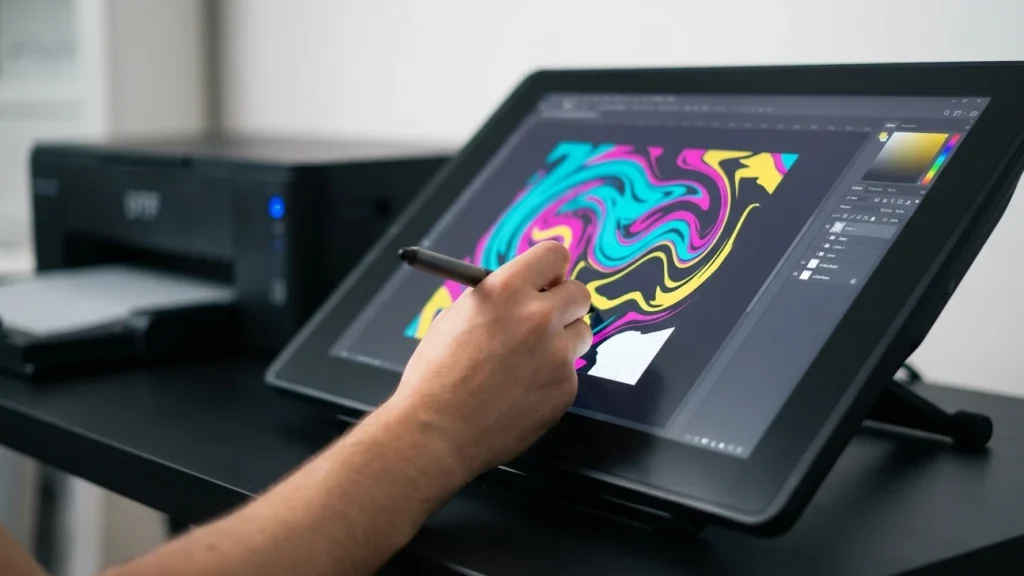
You need to create a design or an artwork for printing. You can create the design with the help of any kind of graphics software like illustrator, adobe photoshop, Coral Draw etc. whatever design you create, you must make sure that it has at least 300 dpi resolution.
Step 2: Printing the Design Using DTF Printer
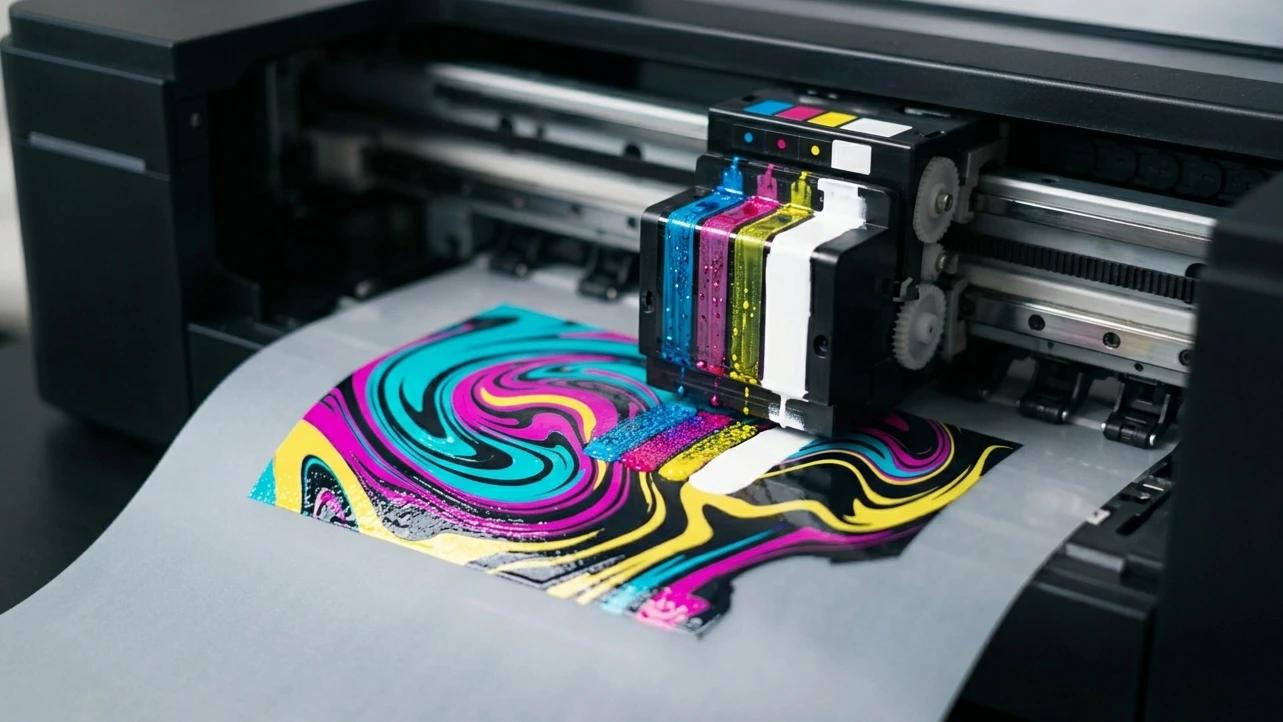
Before printing, the image or the artwork needs to be ripped through RIP software. Here, RIP stands for Raster Image Processor that PNG or JPEG files into CYMK format which DTF printer easily accepts. You may not be able to convert the image file into graphics design software because DTF printers also have white base ink whose configuration settings need to be managed.
Step 3: Applying Adhesive or Powerdering
Once the print comes out, you need to apply adhesive powder on to the inked surface before it gets dried. There are mainly two ways of doing that procedure –
Method 1: Manual Powdering
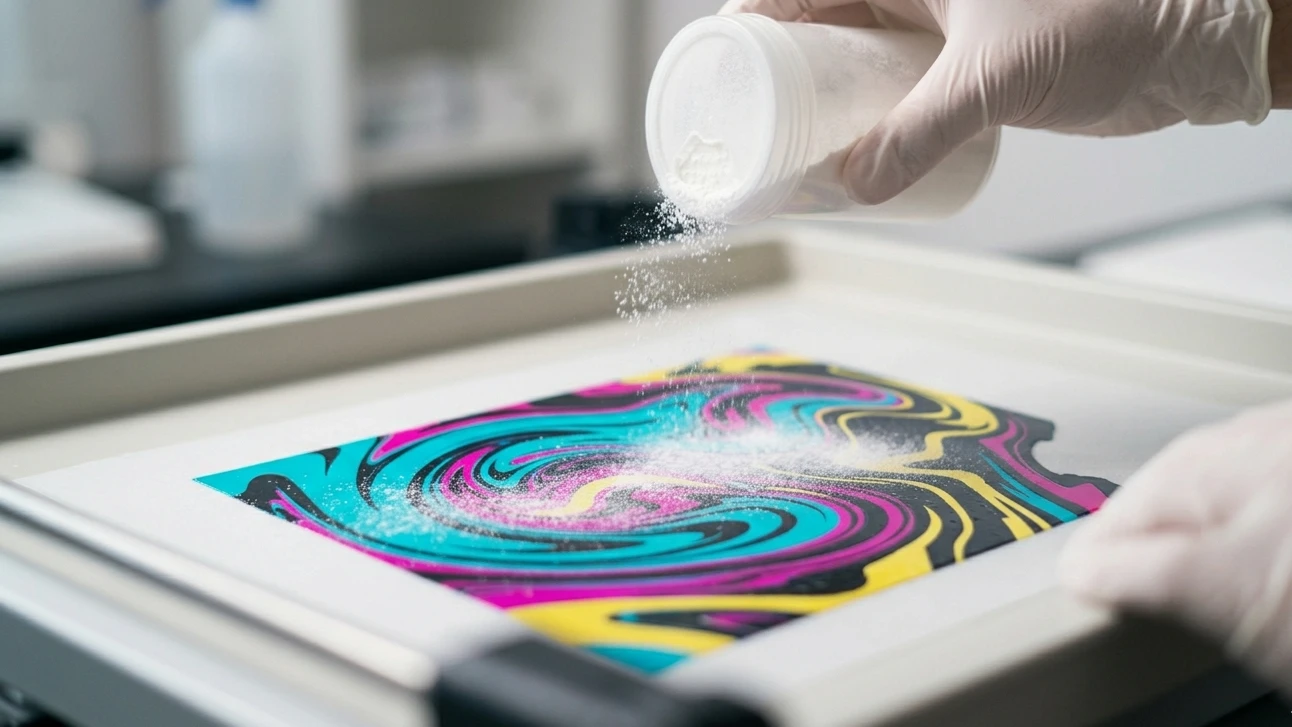
For small batches of prints, you can manually put powder on the transfer film. To organize this task, you can put the DTF film in a tray and pour a generous amount of powder onto it. Lift the film from sizes and then roll it back and forth until it covers the entire design. Once it is covered fully, gently lift the film from one end and remove the excess powder from the film.
Method 2: Dryer Shaker Machine
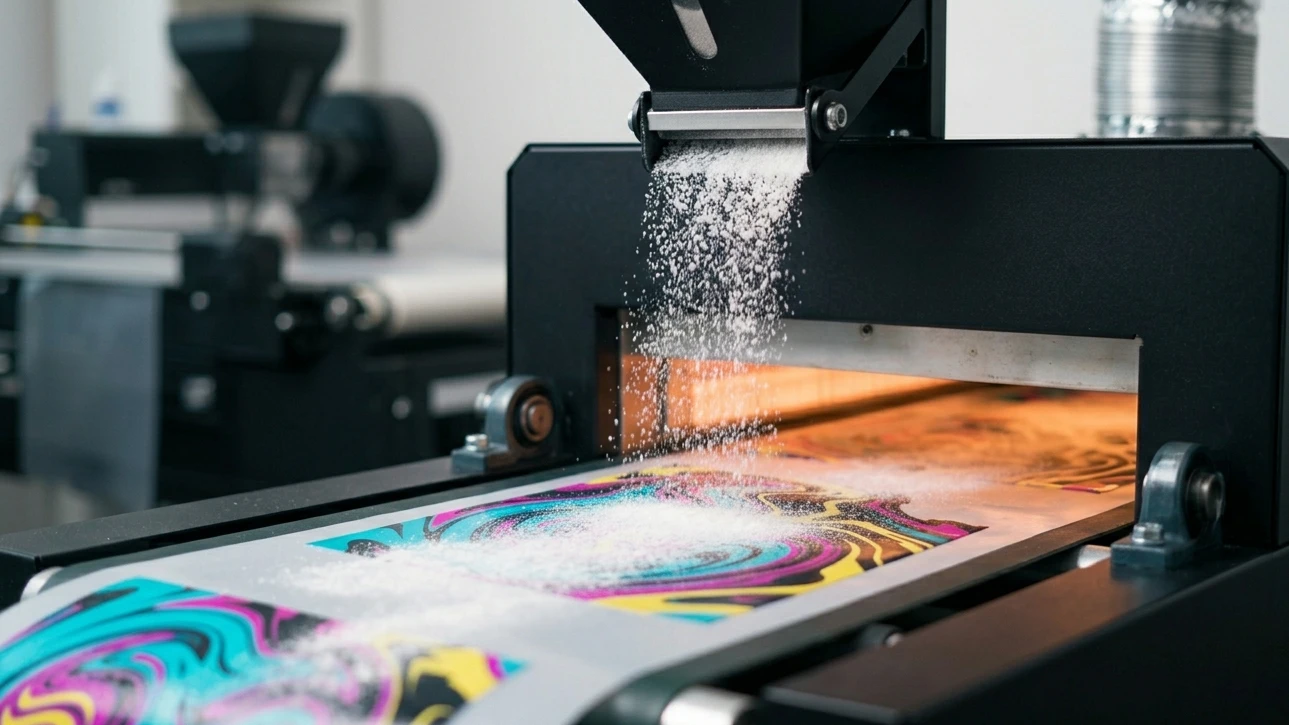
For a larger volume of print, you can use the combo unit that has a dryer and a shaker. It takes in the PET film from the printer, powder it and then cures it automatically.
Step 4: Curing the DTF Film
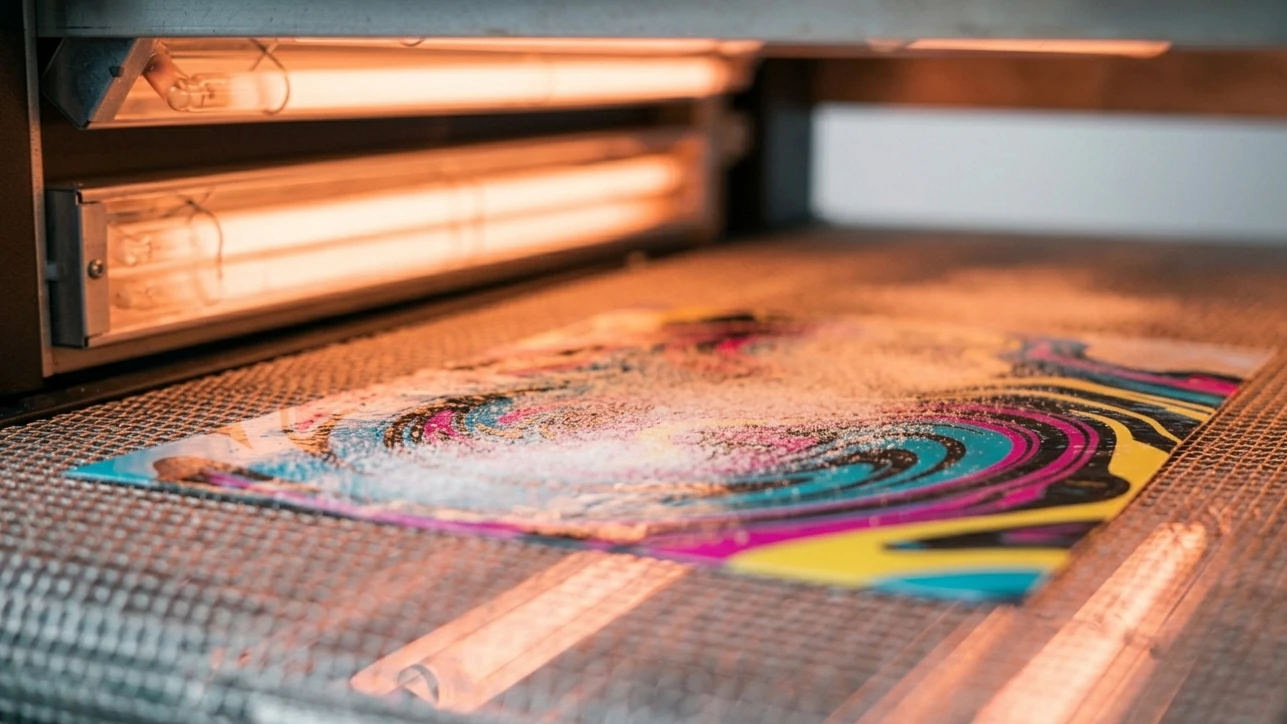
Turn on the heat press and set it at a temperature of 225 to 240 degree F. Instead of calming down, you can hover the upper plate just above the film so that heat melts the powder and cure for 2 to 3 minutes. Once the process is done, look for an orange peel texture around the print area.
Step 5: Heat Press the Design onto the Garment
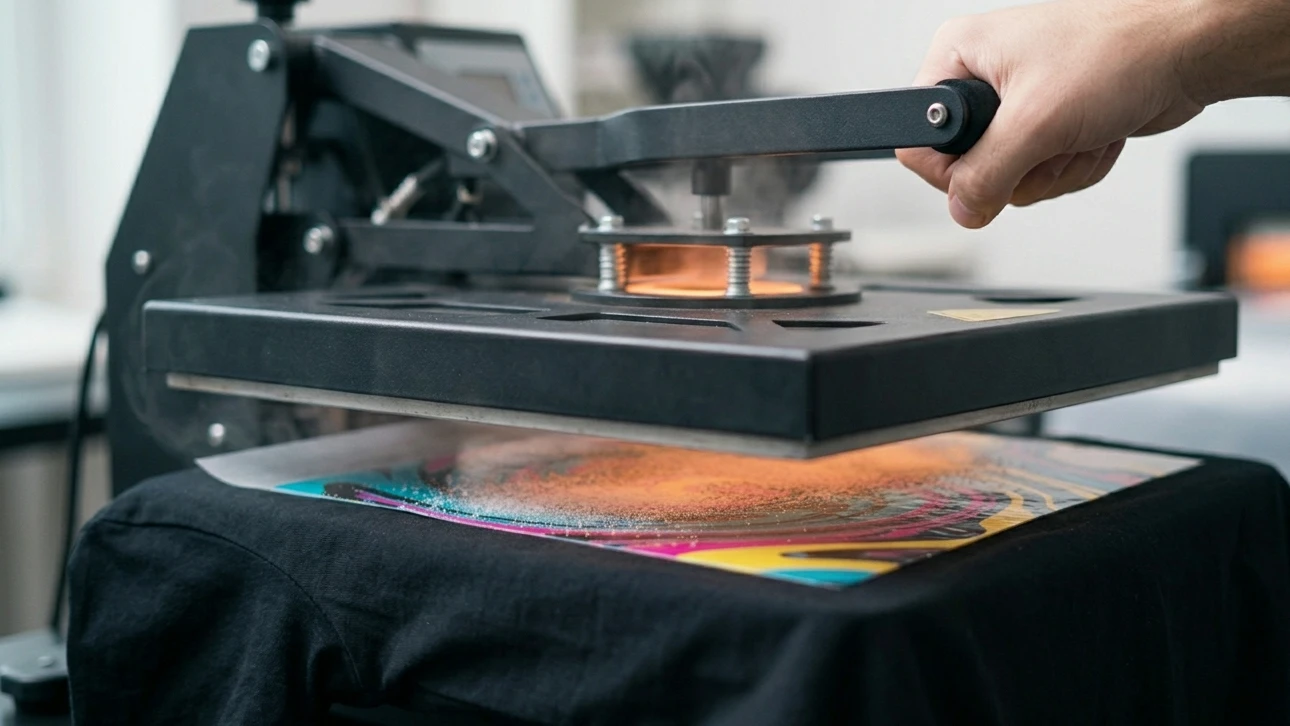
The final step is heat transfer where the heat settings are adjusted based on the fabric material. For example, if a t-shirt is made of polyester fabric , then a heat press of 270 degree F is required for around 20 seconds. Peel the film right after this process and allow it to settle based on the type of sheet you are using.
Some Useful Tips for DTF Printing
- Choose high-quality ink, film sheet and powder for best results.
- Ensure proper powder coverage and shake off the excess
- Test temperature and heat press.
- Wash garments in cold water for longer durability of the print
- Maintain your printer. Conduct regular head cleaning for removing clogs.
DTF Printing vs Other Types of Printing Process
1. DTF vs Screen Printing
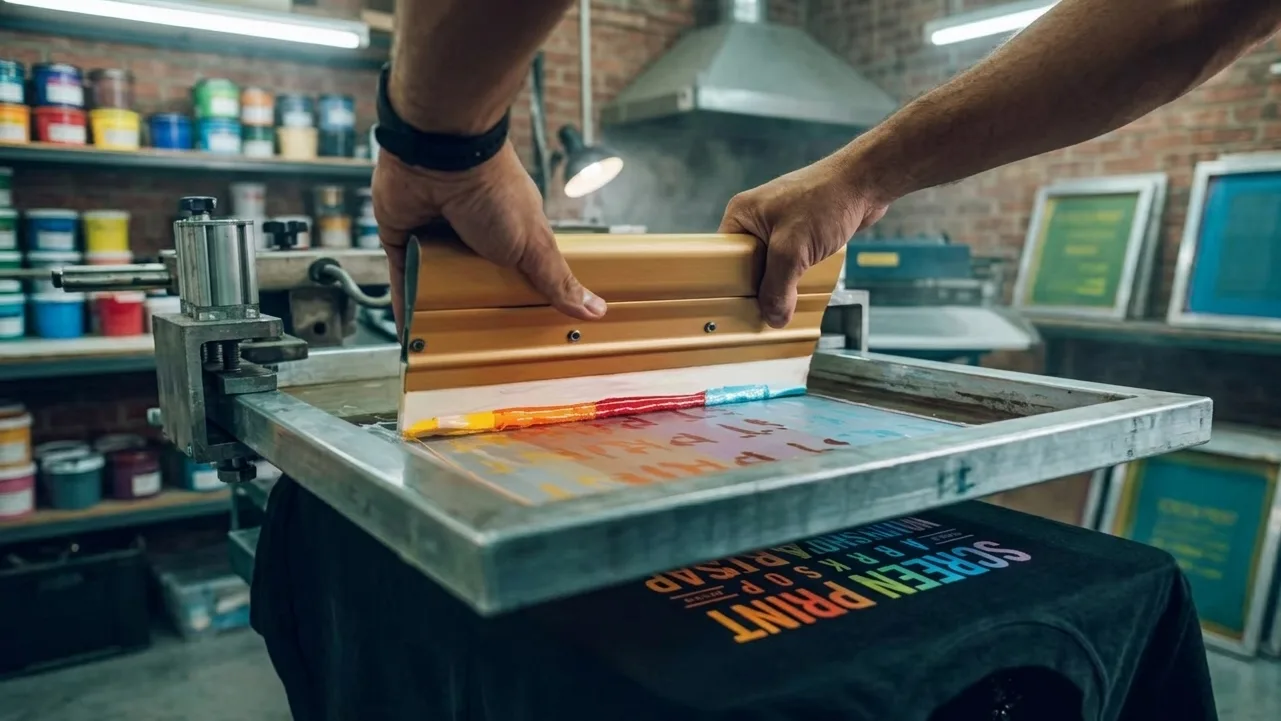
Screen printing works for bulk orders with simple colors but it requires initial setup cost, time and inventory. On the other hand, DTF is an ideal option for full color printing, quick custom printing jobs and low quantity. No screen setup required.
2. DTF vs Sublimation Printing
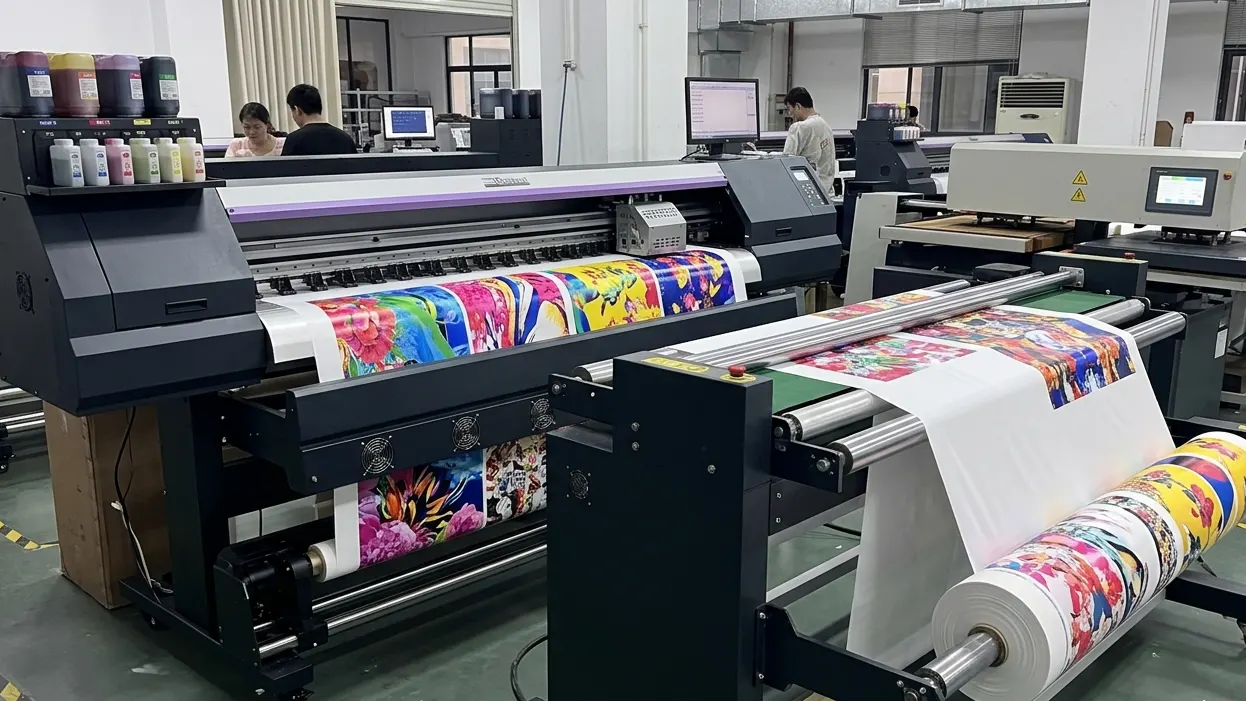
In the sublimation printing process, dye infuses into polyester for a no-feel print. It is applicable on light or white fabric with 100% polyester. DTF works on all types of color and fabrics.
3. DTF vs Heat Transfer Vinyl Printing
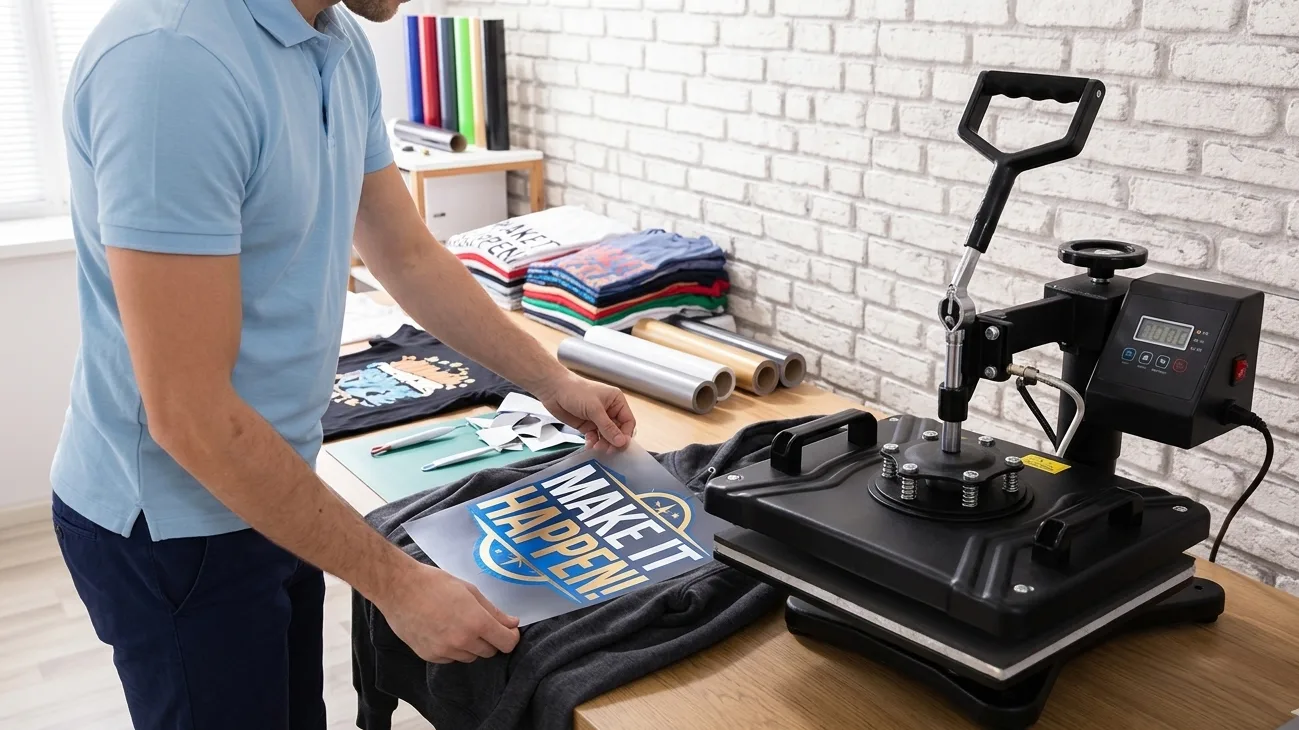
Heat transfer vinyl printing requires weeding and it works great for simple designs, name or shape. On the other hand, DTF printing can efficiently handle complex color designs without weeding. DTF is more integrated than heat transfer vinyl printing.
4. DTF vs DTG Printing
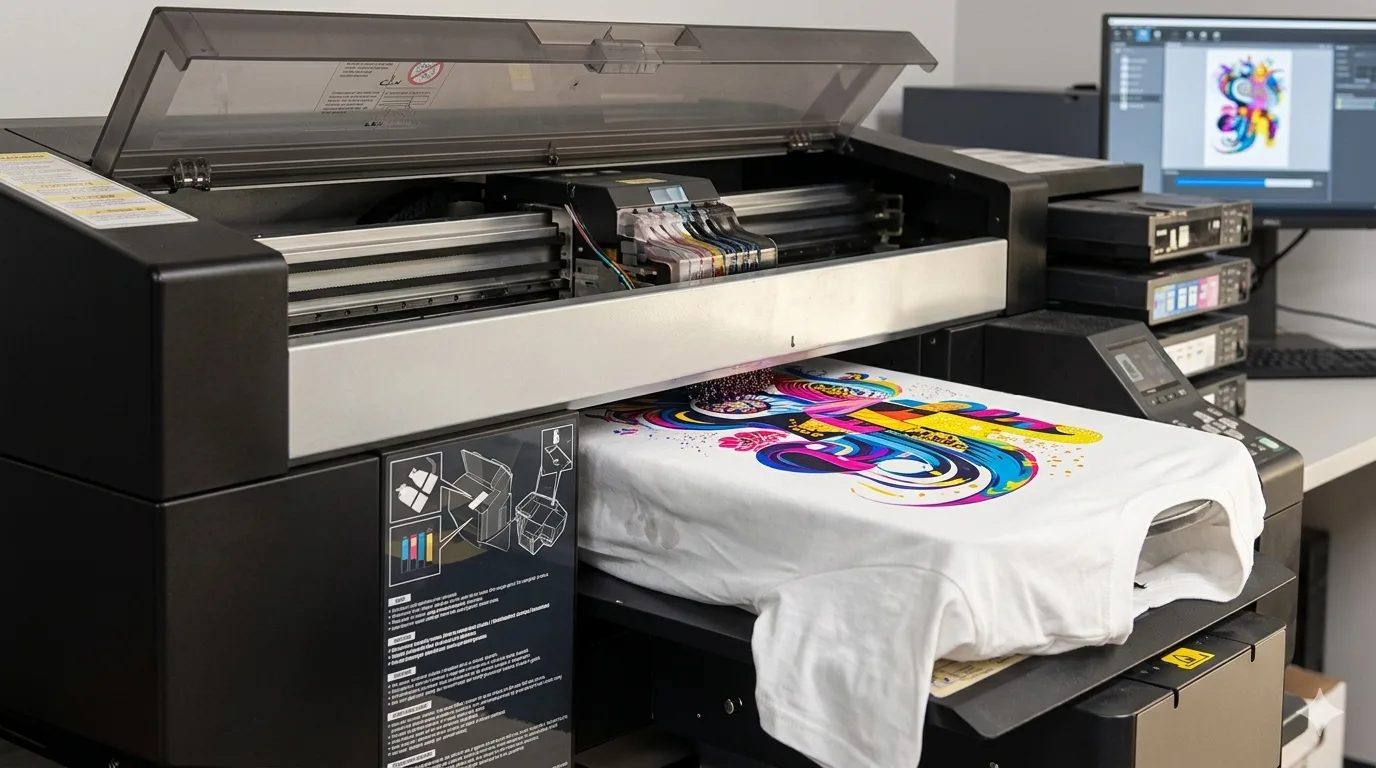
DTG printing is applied directly on garments and it works best on soft hand and light cotton fabric. On the other hand, DTF is a more versatile choice and often stands durable. It also creates prominent print on dark garments
5. DTF vs UV DTF Printing
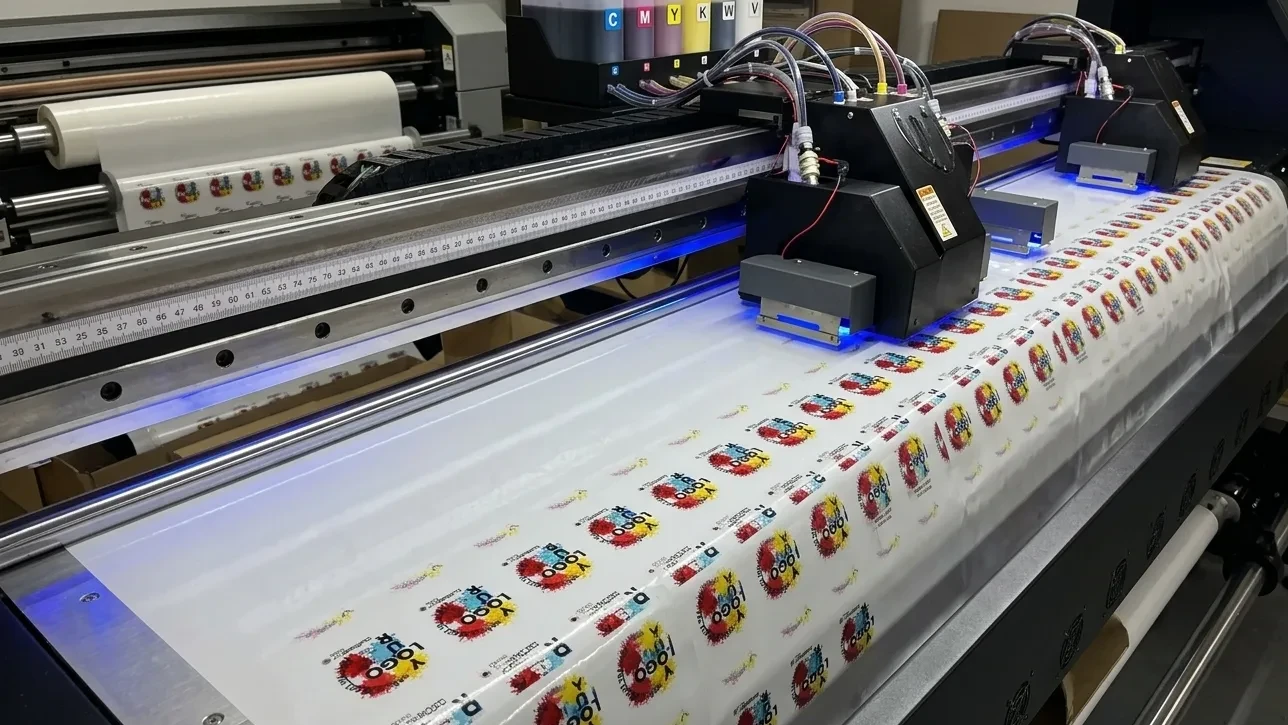
UV DTF uses UV curved inks for hard surfaces without using heat press in some cases, while standard DTF offers a flexible option for textiles. UV DTF works mainly on non-fabric items.
The printing industry is ever-evolving. Know more about different types of printing technologies, their uses and features, helping you to upgrade your custom branding business over time.
Conclusion
DTF printing offers an ideal option for printing custom apparels. This represents a perfect blend of durability, versatility, accessibility and therefore, makes it a perfect option for creators at every level. Whether you need printing on multiple fabric items or a scalable solution to support your business, DTF is an ultimate option.
Frequently Asked Questions
What types of fabrics can be used for DTF printing?
Different types of fabrics such as polyester, cotton, cotton blend etc. On all these types of fabric types, DTF printing can be applied.
Is DTF printing durable?
Yes, DTF printing is highly durable if applied the right way. It retains its color and designs even after multiple washes.
What are the advantages of DTF printing?
DTF printing offers an ideal option for small and startup businesses as they can cater to their scalable printing requirements to support their businesses. Moreover, it offers bright colors, strong durability and fine detailing.
Can DTF printing be used for custom t-shirts?
Yes, DTF printing is widely used for custom t-shirts, custom hoodies, uniforms, sportswear, promotional wear and personalized apparel.
Is DTF printing better than screen printing?
DTF printing offers an ideal choice for precise, detailed, colourful printing designs. While screen printing is an economical choice for bulk orders. The best option depends on your project type and its requirements.